What Is Website Maintenance?
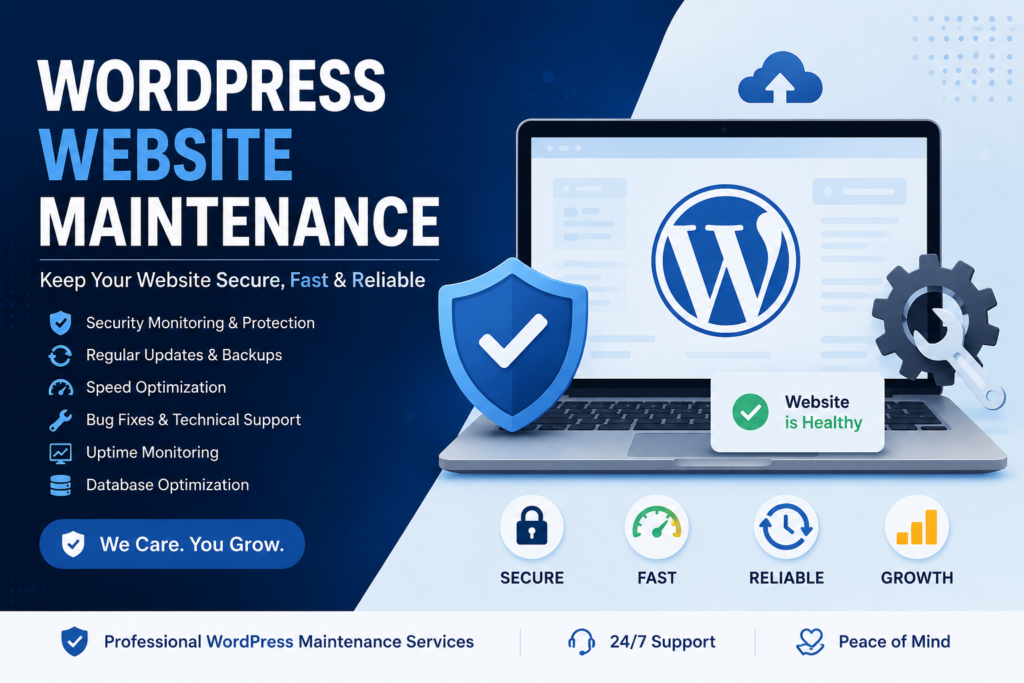
Website maintenance is the process of regularly checking, updating, securing, and optimizing a website to ensure it performs properly at all times. It includes tasks such as software updates, security monitoring, backups, bug fixes, speed optimization, and uptime monitoring.
A website is not a one-time project that can be left unattended after launch. Just like a business requires ongoing management, a website also needs continuous care to stay secure, fast, and functional.
Why Website Maintenance Is Important
In today’s digital environment, a website often serves as the first impression of a business. If the website becomes slow, outdated, or unavailable, potential customers may immediately lose trust.
Website maintenance is important because it helps:
- Improve website speed and performance
- Protect websites from hackers and malware
- Reduce downtime and technical issues
- Keep plugins, themes, and software updated
- Improve user experience and SEO rankings
- Ensure compatibility with modern browsers and devices
Without proper maintenance, websites can quickly become vulnerable to errors and security threats.
Key Elements of Website Maintenance
Security Monitoring
Cybersecurity threats are increasing every day. Hackers often target outdated websites with weak security systems. Website maintenance includes malware scanning, firewall configuration, suspicious activity monitoring, and security updates to keep the website protected.
Software and Plugin Updates
Most websites, especially WordPress websites, rely on plugins, themes, and third-party tools. These components require regular updates to maintain compatibility and security. Maintenance providers ensure all software remains updated without causing conflicts or errors.
Website Backups
Backups are essential for protecting website data. If a website crashes or becomes infected with malware, backups help restore the website quickly. Regular automated backups minimize the risk of permanent data loss.
Speed Optimization
Website speed affects user experience, SEO rankings, and conversion rates. Maintenance services optimize databases, images, scripts, and caching systems to ensure fast loading times.
Uptime Monitoring
A website that frequently goes offline can damage a business reputation. Website maintenance includes uptime monitoring systems that instantly detect downtime and help resolve issues quickly.
Who Needs Website Maintenance Services?
Small Businesses
Small business websites are often used to generate leads and build customer trust. Maintenance ensures these websites remain professional, secure, and accessible.
eCommerce Stores
Online stores depend heavily on website performance. Slow loading speeds or technical issues can directly affect sales and customer satisfaction.
WordPress Website Owners
WordPress websites require regular updates and monitoring because of frequent plugin and theme changes. Maintenance services help avoid compatibility issues and security vulnerabilities.
Agencies and Freelancers
Agencies and freelancers managing multiple client websites can benefit from outsourced maintenance solutions to save time and improve efficiency.
Bloggers and Personal Brands
Even personal blogs and portfolio websites require updates, backups, and security protection to maintain stability and visibility online.
What Happens If You Ignore Website Maintenance?
Ignoring website maintenance can create serious problems for businesses and website owners.
Increased Risk of Hacking
Outdated software and weak security systems make websites easy targets for cyberattacks. A hacked website can lead to data theft, malware infections, and reputational damage.
Website Downtime
Unmaintained websites may experience server issues, broken functionality, or crashes that make the website unavailable to visitors.
Slow Website Performance
Over time, websites accumulate unnecessary files, outdated scripts, and database clutter. Without optimization, loading speed decreases significantly.
SEO Ranking Loss
Search engines prefer secure and fast websites. Poor maintenance can negatively impact SEO performance, causing lower rankings and reduced organic traffic.
Poor User Experience
Visitors expect websites to function smoothly. Broken links, outdated pages, and slow loading speeds create frustration and reduce customer trust.
Higher Repair Costs
Fixing a hacked or broken website can be expensive and time-consuming. Preventive maintenance is usually far more affordable than emergency repairs.
How to Choose the Right Website Maintenance Provider
Choosing the right maintenance provider is extremely important for long-term website stability and security.
A reliable provider should offer:
- Regular website updates
- Malware scanning and security monitoring
- Automated backups
- Performance optimization
- Emergency technical support
- Uptime monitoring
- Fast response times
Businesses should also look for providers with experience, transparent communication, and proven expertise in managing websites professionally.
Benefits of Professional Website Maintenance
Better Security
Professional maintenance providers use advanced tools and monitoring systems to protect websites from cyber threats.
Improved Website Speed
Regular optimization improves loading speed and overall website performance.
Reduced Stress
Business owners can focus on growth instead of dealing with technical problems.
Reliable Technical Support
Professional support teams quickly solve issues before they affect customers.
Increased Customer Trust
A secure and fast website creates a positive impression and improves credibility.
Website Maintenance and SEO
Website maintenance directly impacts search engine optimization. Google and other search engines prioritize websites that are:
- Fast-loading
- Mobile-friendly
- Secure (HTTPS enabled)
- Regularly updated
- Free from broken links and errors
Regular maintenance helps websites maintain strong SEO performance and attract more organic traffic over time.
Why Website Maintenance Is a Long-Term Investment
Many business owners view website maintenance as an extra expense. In reality, it is a long-term investment that protects the business from downtime, data loss, security risks, and lost customers.
A professionally maintained website performs better, ranks higher, and creates a better experience for visitors. It also helps businesses remain competitive in an increasingly digital market.
Conclusion
Website maintenance is an essential part of managing any modern website. It ensures security, speed, reliability, backups, SEO performance, and smooth user experience. Whether you run a small business website, an eCommerce store, a blog, or a corporate platform, regular maintenance is necessary to keep your website functioning properly.
Ignoring website maintenance can lead to security breaches, downtime, slow performance, and financial losses. On the other hand, investing in professional website maintenance helps businesses stay secure, competitive, and reliable online.
A well-maintained website is not only safer and faster but also more trusted by visitors and search engines. For any business that values its online presence, website maintenance should never be ignored.
